
Digital Sheet-fed Variable Data Inkjet Coding Machine
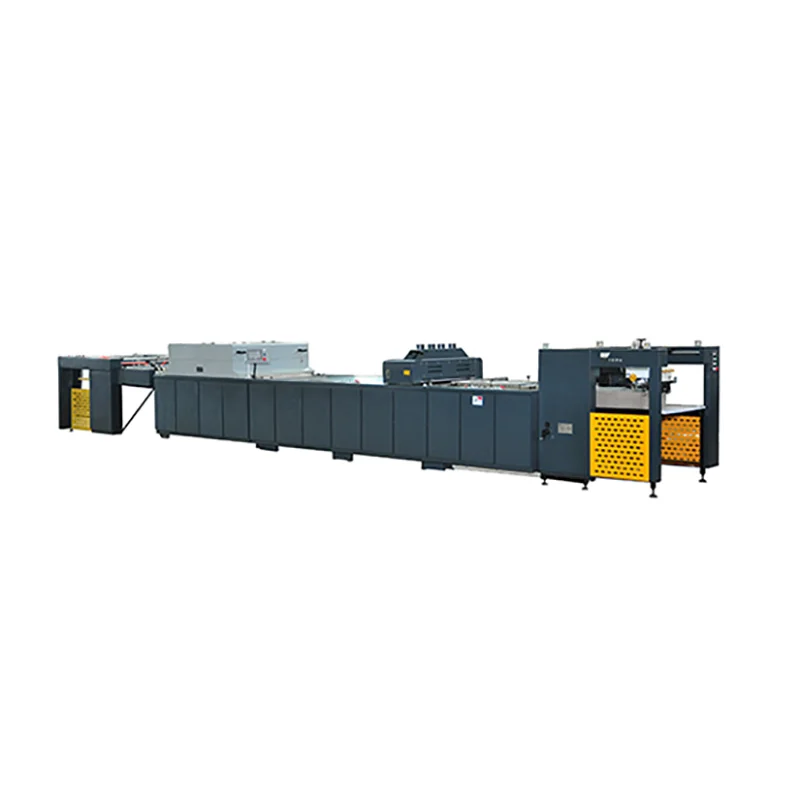
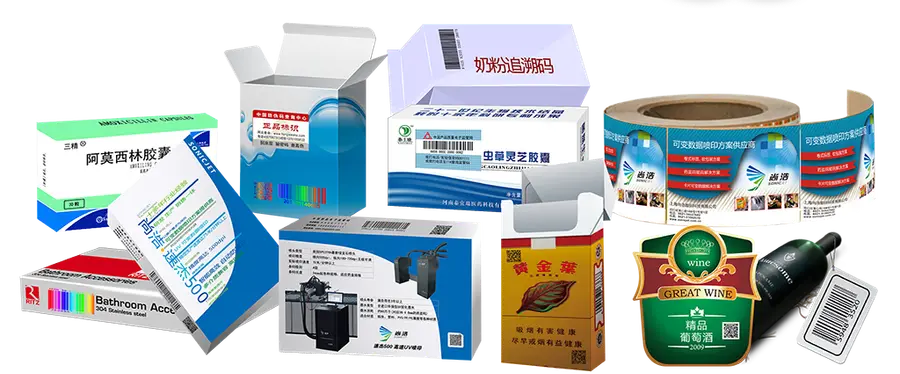
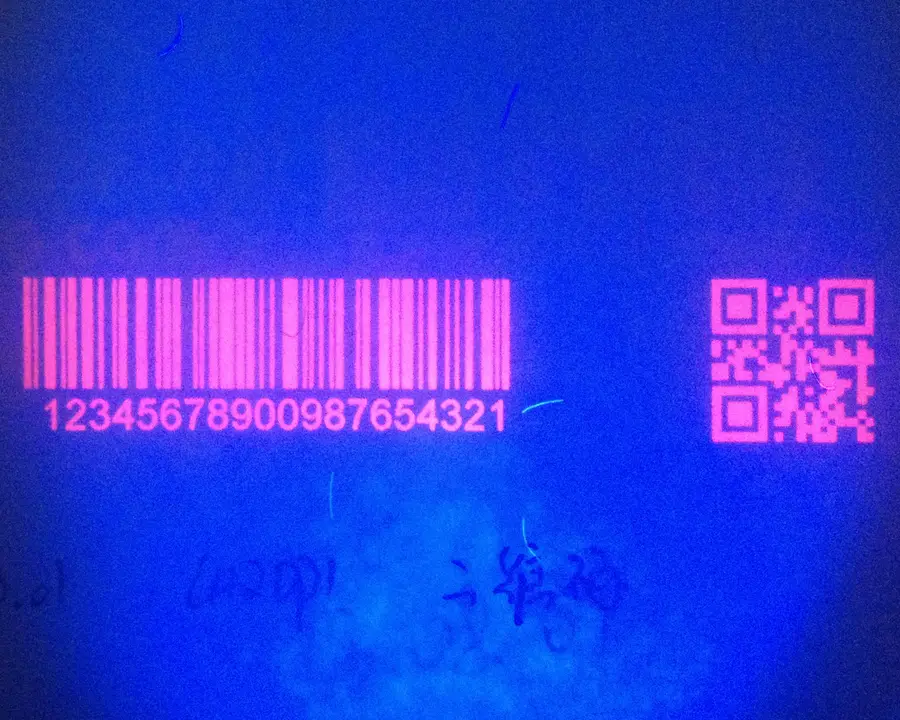
The sheet-fed variable data inkjet coding machine is a professional equipment for printing variable information such as bar codes and two-dimensional codes on a single sheet of paper. Variable types of coding can be realized on the machine to perform variable information printing. This series adopts a more optimized modular design, and users can have more personalized choices. The equipment is widely used in various fields such as medicine packaging, food packaging, lottery tickets, tickets, bills, and card making.
Industrial-grade nozzle: It adopts Japaneseindustrial-grade nozzle piezoelectric nozzle, which has high speed,smooth, stable, long life and easy maintenance.
High print resolution: up to 600dpi*1200dpiresolution.
High-speed printing: printing speed of up to 200 m /min, print resolution of up to 600dpi * 400dpi production speed of 110 m /min.
The typesetting software is easy to operate: thejoint research and development software, the Chinese/English interface,the typesetting is simple and easy to learn, the operation is fast, andthe results are printed.
Flexible typographic mode for seamless printing,printing and printing barcodes, variable data, date, time, batch number,pattern, serial number, variable Chinese, English, digital, 1D, 2D barcodein any printing area Anti-counterfeiting information.
Equipped with 2D barcode automatic generator,customers can choose bar code categories up to 14 categories, up to 100types.Support file formats: TIF,BMP, PNG, images, PDF files, 1D barcodes, QR codes. Special software andspecial supervision code can be customized according to customer needs.
Equipped with 2D barcode automatic generator,customers can choose bar code categories up to 14 categories, up to 100types.
Support file formats: TIF,BMP, PNG, images, PDF files, 1D barcodes, QR codes. Special software andspecial supervision code can be customized according to customer needs.
Support for importing 30 million data at a time.
A) Automatic paper feeding department: Pre-stacking paper, using the printing machine to fly at high speed (speed up to 10,000 sheets/hour), the stacking paper can reach 3,000 sheets, and the whole machine speed control adopts the French Schneider (SCHNEIDER) inverter. The machine adopts PLC touch screen control (touch
The screen has a fault alarm record to view), the main control electrical appliances use the EU CE certification to import brand-name electric. Can be equipped with non-stop paper feeding function.
B) In addition to the powder section: the double-passing brush belt is used for vacuum suction and the electrostatic hot-pressing powder removal can effectively remove the dusting during printing on the surface of the paper, thereby reducing the probability that the nozzle will be blocked due to paper dusting during operation. Effectively improve work efficiency
C) Side gauge correction: oblique pull ball type correction. Positioning accuracy, accuracy is ±0.3MM
D) Coding platform: high-stability cast iron platform, which adopts full-stage suction synchronous belt conveying to make paper conveying more stable. The accuracy of front and rear photoelectric positioning coding is within ±0.5 mm.
E) LEDUV curing part: It adopts the world's advanced LEDUV lamp to cure LEDUV ink, which is completely sealed and does not leak light. The conveyor uses a flat belt to inhale all the way, making the paper convey more stable. The LEDUV lamp is arranged vertically, and the number of lamps opened can be selected according to the number of codes.
Save energy. Water-cooled to ensure that the paper solidifies at low temperatures. Using advanced PLC control system, when the paper enters the platform, the light source can be started instantly, and it is in standby state when there is no paper. Compared with traditional UV lamps, it can save more than 70% energy, low power, long life.
F) Waste rejection part: Pneumatic flap-type waste disposal device, which is convenient for customers to cooperate with the installation of waste detection and rejection functions.
G) Receiving section: The bridge is transported by vacuum suction belt to make the paper output more stable. Automatic pneumatic paper-drawing. Automatically descends. When the paper is jammed, the paper feed is automatically stopped, and the paper-receiving tray is turned up to ensure smooth delivery. Can be equipped with a non-stop delivery function.
| Model | DIGIMAC-SFJET |
|---|---|
| Maximum Sheet Size | 1020 x 1020mm |
| Minimum Sheet Size | 400x400mm |
| Sheet Thickness | 80-450g/m2 |
| Maximum Speed | 120m/min |
| Software | Support text, Numbers, Multiple language, bar code, electronic supervision code, security code, etc. |
| Suitable Printing Material | Various types of paper including: adhesive, PE, PET, HDPE, PET, PVC,etc. |
| Printing Color | monochrome, customized color, |
| Curing Way | curing by LED UV |
| Platform Driven | Full servo control |
| Weight | 6200KG |
Frequently Asked Questions
What are the key specifications of Digital Sheet-fed Variable Data Inkjet Coding Machine?
Maximum Sheet Size: 1020 x 1020mm; Minimum Sheet Size: 400x400mm; Sheet Thickness: 80-450g/m2; Maximum Speed: 120m/min; Software: Support text, Numbers, Multiple language, bar code, electronic supervision code, security code, etc.; Printing Color: monochrome, customized color,; Curing Way: curing by LED UV; Platform Driven: Full servo control; Weight: 6200KG
About McLantis & Ordering FAQ
About McLantis Technology
What is laser direct imaging (LDI) and how does it work?
LDI (Laser Direct Imaging) uses a focused laser — driven by our proprietary Laser MEMS and DLP digital optics — to expose circuit patterns directly onto photoresist-coated boards, replacing traditional film and contact exposure. It delivers micron-level registration, higher yields and faster job setup for PCB and advanced packaging production.
What is computer-to-screen (CTS)?
CTS (Computer-to-Screen) writes the screen image directly onto the emulsion-coated mesh with a digital optical head, eliminating film, capillary film and manual exposure. It is the standard prepress step for textile, ceramic, glass and industrial screen printing.
Which industries do McLantis systems serve?
Our direct-imaging and prepress equipment is used across PCB fabrication, screen printing, textile and ceramic decoration, glass and packaging, and precision micro-fabrication — from prototyping shops to high-volume factories worldwide.
Products & Customization
What product lines does McLantis offer?
We offer LDI laser direct imaging systems, CTS computer-to-screen systems, CTP platesetters, digital inkjet printing lines, and custom DLP / Laser-MEMS micro-fabrication lines built on shared precision motion-control and optical platforms.
Can McLantis equipment be customized for my process?
Yes. Beyond standard models, we design custom exposure and imaging lines — different fields of view, resolutions, substrates and throughput — around our modular Laser MEMS and DLP engine. Share your substrate size, resolution and capacity targets and our engineers will propose a configuration.
What substrates and software are supported?
Systems handle standard PCB substrates, screen meshes, plates and roll or sheet media. Imaging is driven by open file workflows (Gerber, PDF, TIFF) and is compatible with mainstream RIP and prepress software; our team assists with integration during installation.
Ordering, Pricing & Lead Time
How do I request a quote?
Use the inquiry form on our Contact page or email info@mclantisgroup.com with your application, substrate, resolution and target throughput. Our sales engineers reply within 48 hours with a configuration and quotation.
What is the typical lead time and minimum order quantity?
Standard models typically ship in 4–8 weeks; customized lines are quoted case by case. The minimum order quantity is one unit, and we support single-machine pilot deployments before line-scale rollout.
What warranty and after-sales coverage is included?
Every system ships with a standard 12-month warranty covering the optical engine, motion system and controls, with global technical support, remote diagnostics and on-site service options through our regional bases.
Support, Installation & Service
Do you provide installation and operator training?
Yes. Each system is delivered with on-site or remote installation, calibration and hands-on operator training so your team can run production confidently from day one.
How are spare parts and long-term service handled?
We stock critical spares at our regional manufacturing bases and ship globally. Preventive-maintenance plans, firmware updates and lifetime technical support keep your line running throughout its service life.
Do you support export, shipping and local compliance?
We export worldwide with experience across Asia, Europe, the Americas, the Middle East and Africa. Equipment is built to meet common electrical and safety standards, and we handle documentation, crating and freight to your port.