
ディアゾフィルムプロセッサ
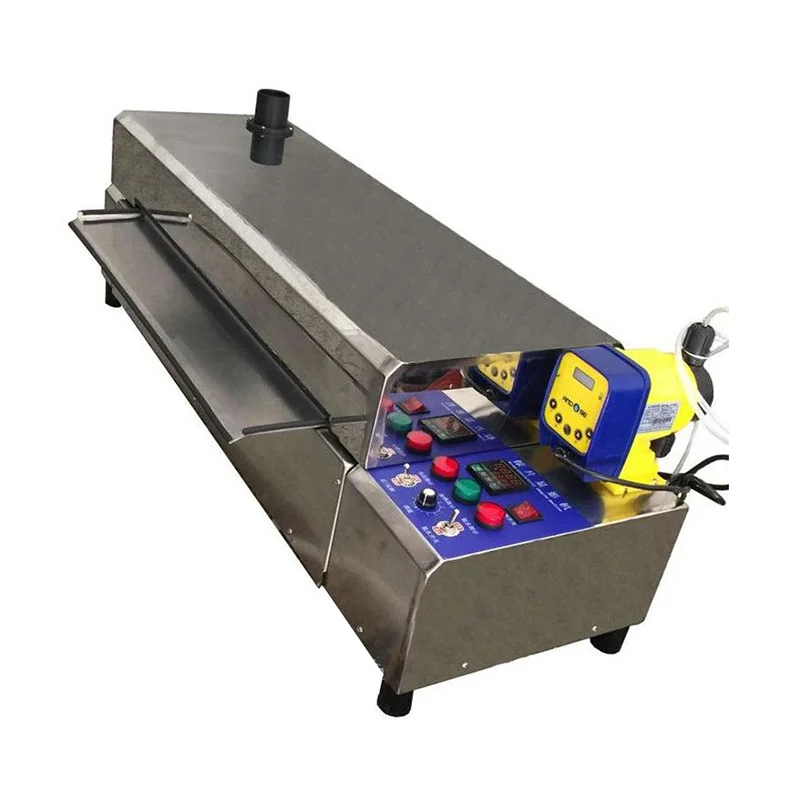
McLantisは世界初のクラスのディアゾフィルムプロセッサ、ディアゾフィルム開発機、ディアゾイメージポッタープロセッサを製造しています
1. 特に設計された加熱装置が使用され、アンモニアガスの開発を最大限に活用します。温度は約45〜50度で、より良い開発が可能です。
2. 数字表示1L/Hアンモニア水計量ポンプを使用して、周囲の流量を0〜120(調整可能)に設定します。
3. チャassisは316ステンレス鋼で作られ、密閉型開発タンク、腐食に強く高温に耐性のあるシリコンシール、アンモニア漏れを減らします。中外国合弁電気部品、腐食に強く高温に耐性のあるシリコンローラー、安定したフィルム供給、簡単な調整、簡単な操作、使いやすく、故障率が低いです。
4. 智能的な二重デジタル表示調整温度調節側調整、正確な定温制御、自動温度制御機能が、温度が一定に達したときに加熱を自動的にオフにし、温度が一定に下がったときに加熱を自動的にオンにします。
5. 内蔵排気システムがあり、排気パイプを排気口に接続するだけで臭いを減らすことができます。
6. 前進と後退機能ボタンが備えられており、オペレーターが誤って基板を逆側に載せた場合でも、すぐに基板の出力方向を修正できます。
7. 速度制御ボタンがあり、フィルムの供給速度を制御できます。
8. 本体の外観はすべて316ステンレス鋼構造で、美しく実用的です。
| Model | PROCEMAC-DZ |
|---|---|
| Function | developing diazo film |
| フィルム幅(ふいるはば) | 90-680mm |
| Ammonia Replenishment | 自动(ジどう) |
| 速度(すど) | 0-2 メートル/分 可調整 |
| 预热(よねцу) | 5分 |
| フィルム面積 | 610× |
| 开发温度(カイ发托度) | 45-50°C |
| 加热(かね) | 0-120度C可调整 |
| 传输模式(デン输模式) | Corrosion-resistant and high-temperature resistant silicone roller |
| Ammonia Replenishment | digit display 1L/H metering pump |
| ローラー(ろーらー) | Rubber rollers 9 pieces of corrosion-resistant and high-temperature-resistant silicone rollers (5 pieces for the lower roller, 4 pieces for upper roller) |
| Developing Tank | 316不锈钢(すふうふうきん) |
| プレート进入 | 可逆的(カえりノ) |
| フィルム入口(ふりむに于入口) | two film enter at same time |
| 装置寸法(そうちすんぽう) | 1080* |
| 功率(ふりり) | 220VAC 50HZ 5A |
| 重量(ジューりょう) | 65KG |
Frequently Asked Questions
ディアゾフィルムプロセッサの主な仕様は?
Function: developing diazo film; Ammonia Replenishment: 自动(ジどう); 速度(すど): 0-2 メートル/分 可調整; 预热(よねцу): 5分; 开发温度(カイ发托度): 45-50°C; 加热(かね): 0-120度C可调整; 传输模式(デン输模式): Corrosion-resistant and high-temperature resistant silicone roller; Ammonia Replenishment: digit display 1L/H metering pump; Developing Tank: 316不锈钢(すふうふうきん); 装置寸法(そうちすんぽう): 1080*480**520mm; 功率(ふりり): 220VAC 50HZ 5A; 重量(ジューりょう): 65KG
About McLantis & Ordering FAQ
About McLantis Technology
What is laser direct imaging (LDI) and how does it work?
LDI (Laser Direct Imaging) uses a focused laser — driven by our proprietary Laser MEMS and DLP digital optics — to expose circuit patterns directly onto photoresist-coated boards, replacing traditional film and contact exposure. It delivers micron-level registration, higher yields and faster job setup for PCB and advanced packaging production.
What is computer-to-screen (CTS)?
CTS (Computer-to-Screen) writes the screen image directly onto the emulsion-coated mesh with a digital optical head, eliminating film, capillary film and manual exposure. It is the standard prepress step for textile, ceramic, glass and industrial screen printing.
Which industries do McLantis systems serve?
Our direct-imaging and prepress equipment is used across PCB fabrication, screen printing, textile and ceramic decoration, glass and packaging, and precision micro-fabrication — from prototyping shops to high-volume factories worldwide.
Products & Customization
What product lines does McLantis offer?
We offer LDI laser direct imaging systems, CTS computer-to-screen systems, CTP platesetters, digital inkjet printing lines, and custom DLP / Laser-MEMS micro-fabrication lines built on shared precision motion-control and optical platforms.
Can McLantis equipment be customized for my process?
Yes. Beyond standard models, we design custom exposure and imaging lines — different fields of view, resolutions, substrates and throughput — around our modular Laser MEMS and DLP engine. Share your substrate size, resolution and capacity targets and our engineers will propose a configuration.
What substrates and software are supported?
Systems handle standard PCB substrates, screen meshes, plates and roll or sheet media. Imaging is driven by open file workflows (Gerber, PDF, TIFF) and is compatible with mainstream RIP and prepress software; our team assists with integration during installation.
Ordering, Pricing & Lead Time
How do I request a quote?
Use the inquiry form on our Contact page or email info@mclantisgroup.com with your application, substrate, resolution and target throughput. Our sales engineers reply within 48 hours with a configuration and quotation.
What is the typical lead time and minimum order quantity?
Standard models typically ship in 4–8 weeks; customized lines are quoted case by case. The minimum order quantity is one unit, and we support single-machine pilot deployments before line-scale rollout.
What warranty and after-sales coverage is included?
Every system ships with a standard 12-month warranty covering the optical engine, motion system and controls, with global technical support, remote diagnostics and on-site service options through our regional bases.
Support, Installation & Service
Do you provide installation and operator training?
Yes. Each system is delivered with on-site or remote installation, calibration and hands-on operator training so your team can run production confidently from day one.
How are spare parts and long-term service handled?
We stock critical spares at our regional manufacturing bases and ship globally. Preventive-maintenance plans, firmware updates and lifetime technical support keep your line running throughout its service life.
Do you support export, shipping and local compliance?
We export worldwide with experience across Asia, Europe, the Americas, the Middle East and Africa. Equipment is built to meet common electrical and safety standards, and we handle documentation, crating and freight to your port.